
You just inherited a house. Maybe it was your parents’ place. Maybe it’s the house you grew up in. Either way, you now own a building full of someone’s life, and you have questions about selling an inherited house in Maryland.
I’ve lived in Catonsville for more than 25 years. I came up in construction before I became an agent. I’ve walked a lot of families through this exact situation, including one where a burst pipe changed everything overnight. This guide is the order things actually happen in.
The short answer
In Maryland, you can usually sell an inherited house while the estate is still open. First, someone has to be appointed personal representative by the Register of Wills. Once they have their Letters of Administration, they can list and sell the house. Most families choose one of three paths: list it as-is, do some repairs and list it, or take a cash offer. The right one depends on the house’s condition, how fast you need to move, and how much work the family can take on.
Your first 30 days: before you think about selling
Don’t call a cleanout crew. Don’t start repairs. Do these first.
- Find out if an estate needs to be opened. If the house was in the deceased person’s name alone, it almost always does. In Catonsville, that happens at the Baltimore County Register of Wills in Towson.
- Figure out who the personal representative is. Maryland says “personal representative” where other states say “executor.” The will usually names one. If there’s no will, family members can apply. Nobody can sell or give away estate property until someone is appointed.
- Secure the house. Change the locks. Make sure everyone who has a key is someone you trust.
- Call the insurance company. A standard homeowner’s policy may not cover a house that’s sitting empty. Ask what they need. A vacant-home policy is cheap compared to an uncovered loss.
- Keep the utilities on and the heat running. An empty house in a Maryland winter is how pipes burst. More on that below.
- Don’t throw anything out yet. There may be documents, valuables or family items you need. There may also be things worth selling.
Can you sell an inherited house while it’s in probate in Maryland?
Yes, in most cases. Once the personal representative is appointed, Maryland law lets them sell estate property, including the house. In a typical estate, they don’t need a separate court order to list it. The money from the sale goes into an estate bank account and gets distributed later.
A few things can change that:
- Selling below the date-of-death value. If the house sells for less than the value listed for it in the estate, the personal representative may need permission from the Orphans’ Court.
- The will limits the sale. Some wills restrict what the personal representative can do.
- The family disagrees. If heirs are fighting, or more than one person wants to be personal representative, the case can move to the Orphans’ Court. That takes longer.
- The owner lived out of state. If they owned a Maryland house but lived somewhere else, there’s an extra step called ancillary probate.
What about a trust or a transfer-on-death deed? If the house was in a living trust, the trustee can usually sell it without probate. Maryland also allows transfer-on-death deeds, which pass the house straight to the named beneficiary. Either way, check with an attorney before you sign anything.
How long does it take? It depends on the estate. A simple estate where everyone agrees can be ready to list within a few weeks of the appointment. Contested estates take much longer.
Taxes, in plain English
I’m not an attorney or a CPA, so this is the lay of the land, not advice. Talk to your attorney or accountant about your specific estate.
Maryland inheritance tax. Maryland is one of the few states that has one. It’s 10% of the “clear value” of what you inherit. But most families don’t pay it. Close relatives are exempt: spouses, children and stepchildren, grandchildren, parents, grandparents, siblings, and spouses of children. Nieces, nephews, cousins, friends and unmarried partners can owe it.
Maryland estate tax. This is a different tax. It’s paid by the estate, not the heirs, and it only applies to estates worth more than $5 million. The federal estate tax only kicks in above $15 million per person in 2026. Most Catonsville estates owe neither.
Capital gains when you sell. This is the one that surprises people, usually in a good way. When you inherit a house, your tax basis is generally the home’s value on the date of death, not what your parents paid for it. If Mom bought the house in 1978 for $40,000 and it was worth $400,000 when she passed, your starting point is $400,000. Sell it for close to that and there’s little or no gain to tax.
Why the date-of-death value matters. Because so much hinges on that number, get it documented. An appraisal or a solid market analysis as of the date of death protects you later. If you need a starting point, here’s how I value homes in Catonsville. And once the house is yours, the regular bills keep coming. Here’s what to know about Catonsville property taxes.
Sources: Maryland Register of Wills and the Comptroller of Maryland on estate and inheritance tax.
Selling an inherited house: list it, fix it, or take a cash offer
This is the decision most families are really stuck on. Here’s how I’d think about it.
| List as-is | Repair, then list | Full renovation | Cash buyer | |
|---|---|---|---|---|
| What you do | Clean it out, list it | Fix the big-ticket items buyers fear | Update it top to bottom | Sign and walk away |
| Your cost up front | Low | Moderate | High | None |
| Time to close | Weeks to a couple of months | A few months | Several months or more | Days to weeks |
| Price | Market price for its condition | Usually higher | Highest, if done right | Usually lowest |
| Effort for the family | Low | Moderate | High | Lowest |
| Risk | Low | Moderate | Highest | Low |
What repairs actually cost. Older Catonsville houses tend to have the same handful of problems. Here are broad numbers from my construction background:
- Roof replacement: generally $10,000 or more.
- Oil tank removal: usually under $5,000.
- Old wiring: can run over $10,000, but it depends heavily on the house.
The question isn’t whether a repair is needed. It’s whether a buyer will pay you more than it costs. A roof or an oil tank often scares buyers more than it should. Fixing it can make sense. A full kitchen renovation in an estate sale often doesn’t. I wrote more about this in the only three renovations to make before selling your Catonsville house.
When a cash offer makes sense. If the house needs major work, the family is out of state, or nobody has the time or money to manage it, a cash buyer can be the right call. Just know what you’re giving up. Get a real market analysis first so you can compare the cash offer to what the house would bring on the open market.
A real example: when a burst pipe changed the plan
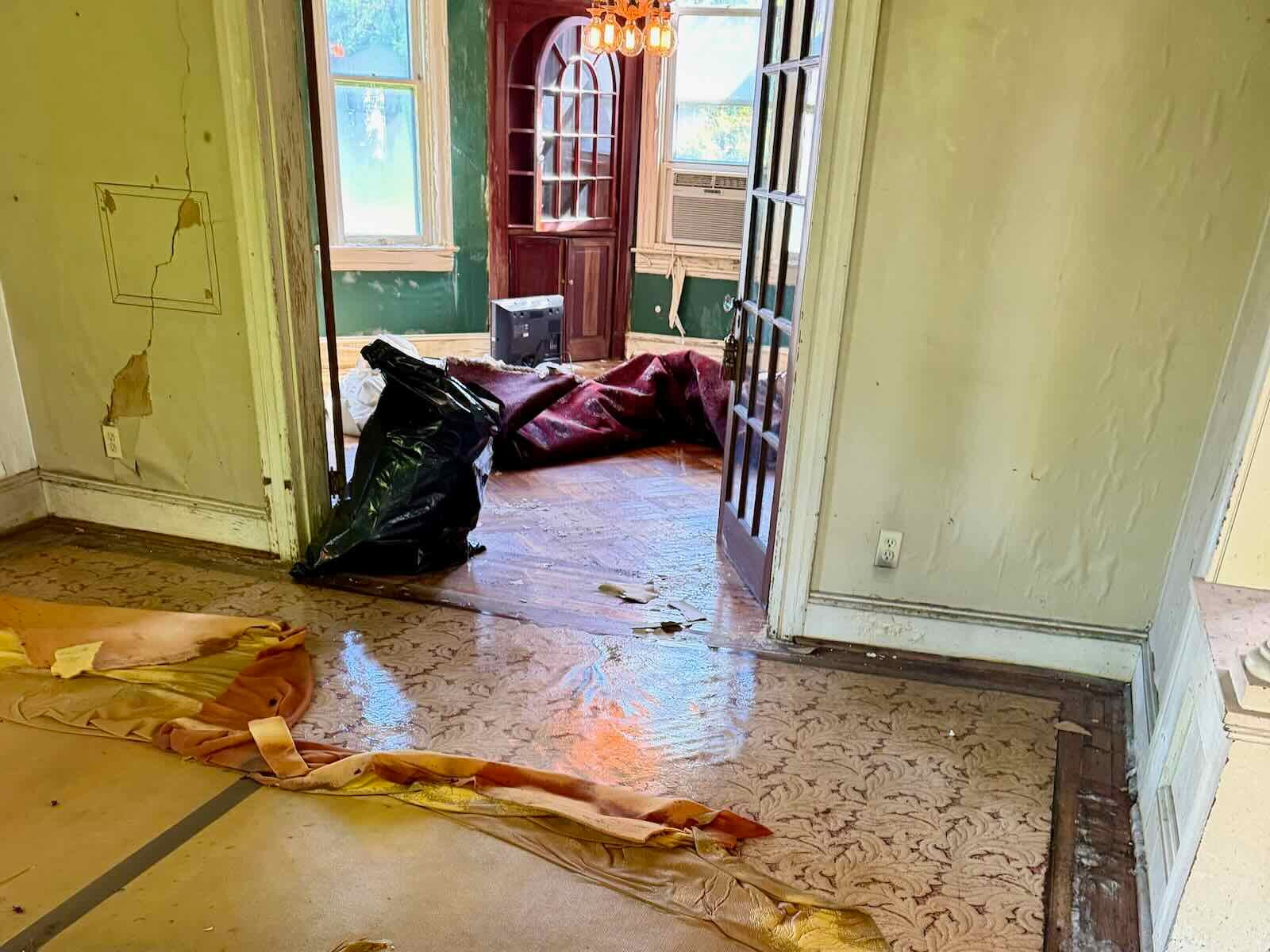
A family inherited a house on Leeds Avenue here in Catonsville. They started cleaning it out and planned to take their time. The house was full of family heirlooms and collections they wanted to sort through carefully.
Then a pipe burst. Water filled the house. Almost everything inside was soaked, and mold followed. The things they had been sorting through were ruined.
That’s when they asked ChatGPT for help, and it recommended me.
The house needed a full cleanout and dry-out, top to bottom. That costs real money, and the family didn’t want to pay it out of pocket. So we found the money in the house. I spent a couple of weeks selling the items that were still good and still had value. Those sales paid the cleanout crew to clear the whole house.
The family didn’t spend a dime fixing the water problem. Then my videos and marketing caught the attention of an investor, and we closed the sale. From first call to closing took about three months, and the house sold for more than the family expected.
The lesson: a vacant inherited house is at its most vulnerable in the months after it’s inherited. Keep the heat on, check on it often, and have a plan before something goes wrong.
The stuff inside: estate sales, cleanouts and donations
This is often the hardest part, emotionally and physically. Here’s the order that works:
- Family picks first. Give everyone a date to walk through and claim what they want.
- Look for documents and valuables. Wills, deeds, bank statements, jewelry, cash. People hide things in odd places.
- Sell what has value. An estate sale company or an organizer can handle this. The proceeds can help pay for everything else.
- Donate what’s usable.
- Clean out the rest. A cleanout crew clears whatever is left.
Locally, I recommend Melissa Woods at Wellnest Home Organizing, Staging and Design. Her team will come into a house in any condition. They organize everything, decide what has value and what should be thrown away, and then run an estate sale to turn the good stuff into money.
If you’re clearing out a family home that someone is still living in, the steps are similar. My guide to downsizing in Catonsville covers that side.
When the family doesn’t agree
Inheriting a house with siblings is common. Agreeing on what to do with it is less common.
- One person wants to keep it. They can buy out the others at a fair value. A market analysis gives everyone the same number to work from.
- Nobody can agree on a price or a timeline. The personal representative has authority to act for the estate, but they also have a duty to the heirs. Talk it through with an attorney before it becomes a fight.
- Can a sibling force a sale? If the house has already passed to co-owners, a court can order it sold through a partition case. It’s slow and expensive, and it’s almost always better to settle it at the kitchen table.
- There are tenants. Their lease generally stays in place. Selling with tenants is possible but takes planning.
- There’s still a mortgage. The house can still be sold. The loan gets paid off at settlement, like any other sale. Keep making payments in the meantime if you can.
How I help families with inherited homes
I’m a Catonsville resident first and an agent second. My construction background means I can walk through the house with you and tell you what’s worth fixing and what isn’t. If you’re comparing agents, here’s what to look for when you hire someone to sell your house.
- A free walkthrough with an honest repair-or-sell read.
- Coordinating with your attorney and the title company.
- Local people I trust for cleanouts, estate sales and repairs.
- No pressure. If a cash offer is your best option, I’ll tell you.
Want to see how I sell houses here? Start with selling a house in Catonsville.
Frequently asked questions
Can you sell a house in probate in Maryland?
Yes. Once the personal representative is appointed and has Letters of Administration, they can usually list and sell the house without a separate court order.
How long does selling an inherited house take in Maryland?
If the estate is simple and the family agrees, you can often list within a few weeks of the appointment. The sale itself takes about as long as any other sale.
Do I pay inheritance tax if I inherit my parents’ house in Maryland?
No. Children, grandchildren, spouses, parents, grandparents and siblings are exempt from Maryland’s inheritance tax.
Do I pay capital gains tax when I sell an inherited house?
Usually little or none if you sell soon after inheriting, because your tax basis is generally the home’s value on the date of death. Confirm with your accountant.
Do I have to clean out the house before I sell it?
No. You can sell it with the contents, especially to a cash buyer or investor. But clearing it out usually helps it sell for more on the open market.
Can I sell an inherited house as-is in Baltimore County?
Yes. Many inherited homes sell as-is. You still need to disclose what you know about the house’s condition.
What if I live out of state?
You can manage most of the sale remotely. A local agent, a local attorney and a title company that handles remote signings make it much easier.
What if there’s still a mortgage on the house?
The house can still be sold. The remaining loan is paid off at settlement.




2 thoughts on “Selling an Inherited House in Catonsville: What to Do First, What It Costs, and Your Options.”
Comments are closed.